Article
Best Dog Food for Every Need (2026 Guide)
Discover the best dog food for your pet's life stage, size, and health goals. Vet-backed picks, a comparison table, and label-reading tips included.
July 18, 2026 · 7 min read
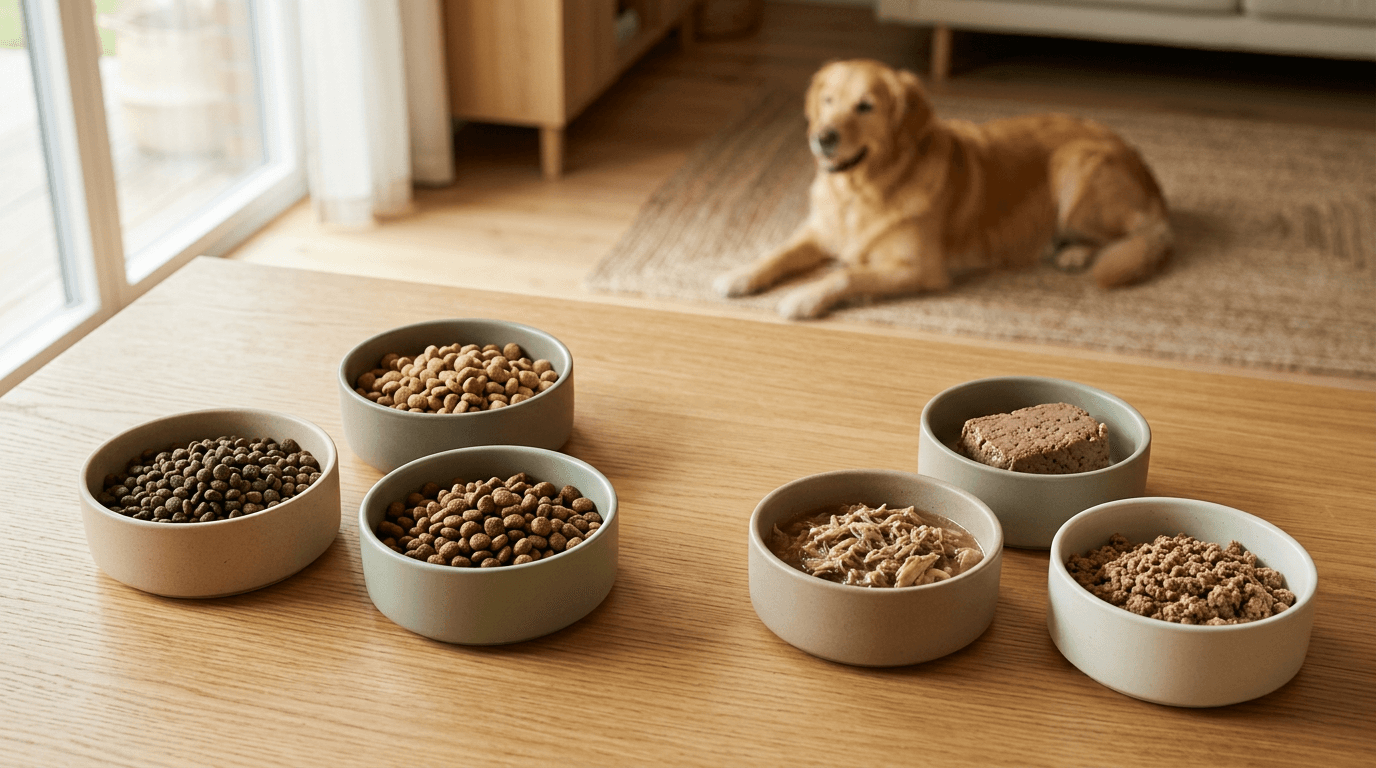
Choosing the best dog food for your dog is one of the highest-leverage health decisions you'll make as a pet owner. The right food affects coat quality, energy levels, gut health, and longevity — yet 68% of dog owners report confusion when reading pet food labels. This guide cuts through the noise with evidence-backed picks organized by use case, a side-by-side comparison table, and a framework for reading the ingredient list like a nutritionist.
What Makes the Best Dog Food? Key Criteria
Before comparing specific products, it helps to understand the four pillars that separate genuinely high-quality dog food from clever marketing:
### 1. AAFCO Nutritional Adequacy Statement
The Association of American Feed Control Officials (AAFCO) sets minimum nutrient profiles for dog food. Look for the phrase "complete and balanced" on the label — this is the baseline, not a bonus.
### 2. Named Protein as the First Ingredient
"Chicken," "salmon," or "beef" should appear before any grain, filler, or by-product. Vague terms like "meat meal" or "animal digest" signal lower ingredient quality.
### 3. No Artificial Preservatives in the Top 10 Ingredients
BHA, BHT, and ethoxyquin are synthetic preservatives linked to oxidative stress in dogs. Mixed tocopherols (vitamin E) are the safer preservation method used by premium brands.
### 4. Life Stage Appropriateness
A food optimized for a 10-week-old puppy has a fundamentally different macro profile than one designed for a 9-year-old large-breed senior. Feeding the wrong stage formula can create long-term deficiencies.
Best Dog Food for Every Use Case — Comparison Table
| Use Case | Top Pick | Protein % | Key Feature | Approx. Monthly Cost |
|---|---|---|---|---|
| Best Overall | Orijen Original | 38% | Biologically appropriate, 85% meat | $90–$110 |
| Best for Puppies | Royal Canin Breed-Specific Puppy | 30% | Tailored DHA + calcium ratios | $70–$85 |
| Best for Large Breeds | Purina Pro Plan Large Breed | 26% | Controlled phosphorus, glucosamine | $65–$80 |
| Best for Small Breeds | Hill's Science Diet Small Bites | 24% | Small kibble, high caloric density | $55–$70 |
| Best for Sensitive Stomachs | Blue Buffalo Basics LID | 22% | Single animal protein, no corn/wheat/soy | $75–$90 |
| Best Budget Pick | Purina ONE SmartBlend | 26% | Real chicken first, no fillers | $35–$45 |
| Best Grain-Free | Taste of the Wild Pacific Stream | 25% | Smoked salmon, no grain, omega-3 rich | $60–$75 |
| Best Fresh/Wet Food | The Farmer's Dog | 30%+ | Human-grade, vet-developed recipes | $80–$150 |
Prices are approximate U.S. retail estimates as of mid-2026.
Top Picks Breakdown
### Best Overall: Orijen Original
Orijen consistently earns top marks from independent nutritionists because 85% of its ingredients are animal-derived — mirroring a biologically appropriate ancestral diet. It contains 38% crude protein, uses whole prey ratios (muscle, organ, cartilage), and is preserved with mixed tocopherols. The tradeoff is cost, but for owners treating their dog as family, the investment in preventive nutrition pays dividends in vet bills avoided.
### Best for Puppies: Royal Canin Breed-Specific Puppy
Puppies need 22 amino acids in precise ratios, and DHA for neurological development. Royal Canin's breed-specific formulas go further than most by calibrating kibble size, caloric density, and mineral ratios to the adult weight and skeletal structure of each breed. This is the closest thing to a truly personalized puppy food available at scale.
### Best for Sensitive Stomachs: Blue Buffalo Basics LID
Limited Ingredient Diet (LID) formulas strip the ingredient list to a single protein source and a single carbohydrate. Blue Buffalo Basics uses either turkey & potato or salmon & potato as its base, eliminating the most common food allergens for dogs. Food sensitivities affect an estimated 10–15% of dogs, making LID formulas an important category.
### Best Budget Pick: Purina ONE SmartBlend
Purina ONE is the most independently validated budget-friendly option on this list. It places real chicken as the first ingredient, includes natural glucosamine for joint health, and has decades of feeding trials behind its formulations — a rigorous standard that many boutique brands skip entirely.
### Best Fresh Food: The Farmer's Dog
Fresh, human-grade dog food is the fastest-growing segment in the pet food market. The Farmer's Dog delivers pre-portioned meals developed by board-certified veterinary nutritionists, with ingredients you can pronounce. Studies from the University of Illinois have found fresh diets improve stool quality and digestibility compared to extruded kibble in controlled conditions.
How to Read a Dog Food Label: The 5-Second Scan
Even the best-recommended food can be wrong for your specific dog. Use this rapid framework:
- Check position 1–3 on the ingredient list. Is a named protein source first? Good. Is it followed immediately by another protein meal? Even better.
- Find the AAFCO statement. It must say "complete and balanced" for the correct life stage (adult maintenance, all life stages, etc.).
- Scan for red-flag preservatives. BHA, BHT, ethoxyquin — if any appear in the top 10, move on.
- Confirm the guaranteed analysis. Crude protein ≥ 18% for adults, ≥ 22% for puppies (AAFCO minimum). Premium foods far exceed these floors.
- Cross-reference with a scanner tool. Tools like the CalmCompanion pet food scanner decode ingredient lists ingredient by ingredient, flagging species-specific concerns that generic label reading misses.
The Role of Routine in Dog Nutrition
Feeding the best dog food once isn't enough — consistency matters more than perfection. Dogs have circadian digestive rhythms; feeding at the same two times daily regulates cortisol, supports a stable gut microbiome, and improves nutrient absorption. A 2021 study published in PLOS ONE found that dogs fed on a consistent schedule showed measurably lower stress biomarkers than those fed erratically. Build a daily feeding routine and stick to it.
Frequently Asked Questions
Q: How do I know if my dog's current food is actually good?
Scan the ingredient label using AAFCO guidelines or a dedicated tool. Look for a named protein first, complete and balanced certification for the correct life stage, and absence of artificial preservatives in the first ten ingredients. If your dog has consistent energy, healthy coat, and firm stools, those are also strong real-world indicators.
Q: Is grain-free dog food actually healthier?
Not necessarily, and in some cases it may carry risk. The FDA issued an investigation into a potential link between grain-free diets high in legumes and dilated cardiomyopathy (DCM) in dogs. Most veterinary nutritionists recommend grain-inclusive foods unless your dog has a confirmed grain allergy. Consult your vet before switching to grain-free.
Q: How much should I feed my dog each day?
Feeding amount depends on your dog's current weight, target weight, age, activity level, and the caloric density of the food. Most bags provide a starting guideline based on body weight. A 30-pound adult moderately active dog typically needs 1.5–2 cups of a standard kibble per day, split into two meals. Adjust every 4–6 weeks based on body condition score.
Q: Can I mix wet and dry dog food?
Yes, and there are advantages to doing so. Wet food increases hydration (critical for kidney health) and palatability. Dry food supports dental health and is more economical. A common approach is 75% dry, 25% wet. Keep total daily caloric intake consistent regardless of format mix.
Conclusion
Finding the best dog food isn't a one-time decision — it's an ongoing practice of reading labels, matching nutrition to life stage, and monitoring your dog's real-world health signals. The picks in this guide represent the most defensible choices across the major use cases, backed by AAFCO compliance, feeding trial data, and ingredient quality standards. Start with the right formula, build a consistent feeding routine, and use smart tools like CalmCompanion to decode labels before the food ever hits the bowl. When you treat nutrition as a system rather than a product purchase, your dog's long-term health reflects it.
References
- AAFCO — Understanding Pet Food Labels
- AVMA — Selecting Pet Food
- Merck Veterinary Manual — Food Allergies in Dogs
- PLOS ONE — Feeding Schedule and Canine Stress Biomarkers (2021)
- FDA — Grain-Free Pet Food and DCM Investigation
- University of Illinois College of Veterinary Medicine — Nutrition Research
Related guides
Recommended next step
Visit website
Explore the next step when you’re ready.
Continue